On November 15th, the day after he celebrated his 65th
birthday, he opened the 2013 Commonwealth Heads of Government Meeting (CHOGM)
in Colombo, Sri Lanka in the place of the Queen, who is Head of the
Commonwealth.
CHOGM has its origins in the First Colonial
Conference of 1887, at which there was a gathering of the leaders from the
self-governing dominions within the British Empire. From
1907, they became
known as Imperial Conferences, but as the dominions became independent, the
word “imperial” was dropped, and from 1944 to 1969, the meetings became known
as the Commonwealth Prime Ministers’ Conference. Through the 1960’s the rapid
process of decolonization resulted in an influx of former colonies becoming
Commonwealth members – many of them with elected presidents or hereditary
monarchs of their own, which meant that the term “prime ministers’” no longer
applied to some leaders. The result was that the meetings – which had been held
in London – began to rotate to other Commonwealth cities beginning with
Singapore in 1971, and in that same year, the name was changed for the last
time to the Commonwealth Heads of Government Meeting.
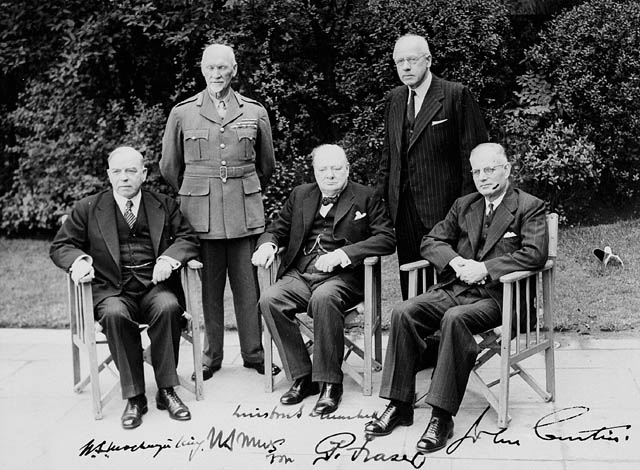 |
| Commonwealth Prime Ministers' Conference, 1944. Image Source: Library and Archives Canada |
The purpose of the meetings is to discuss critical
issues affecting individual member states and the wider Commonwealth, and to
create common policies and solutions to deal with them. Among the issues brought up at this summit were the concerns over human rights in Sri Lanka, as well as electoral crisis in the Maldives.
With regard to Sri Lanka, the island nation has been dogged by allegations of human rights abuse during and after its 27 year civil war, which ended in 2009. The government has been particularly accused of war crimes against the ethnic Tamil population in the northern part of the island, as well as intimidating journalists. President Mahinda Rajapaksa has denied such allegations, but has refused international inquires, believing that such investigations are an intrusion into domestic affairs. Commonwealth leaders from Canada, Mauritus, and India - the largest Commonwealth country - boycotted the summit in protest, but others such as British Prime Minister David Cameron have opted to engage with Sri Lanka in addressing such issues. South Africa's president, Jacob Zuma, shared lessons on political and social reconciliation to the government, citing his own country's work toward reconciling its black majority and white minority.
In doing what Prime Minister Cameron and President Zuma did, they showed how these summits can be used resolve critical issues, as well as to provide a forum for addressing the core values and goals of the organization, and to renew the traditional bonds between these countries of the old Empire.
At the summits, there are two main sessions: the executive sessions and the retreats. Executive sessions are formal business gatherings for the heads of government at which notes are taken and a wide group of people take part and/or observe. Retreats are informal gatherings at which only the heads of government, their spouses, and one other person (security, personal aide, other government official, etc.) may attend, and it is here where the attendees can speak frankly and openly without advisors, so that issues may be resolved.
With regard to Sri Lanka, the island nation has been dogged by allegations of human rights abuse during and after its 27 year civil war, which ended in 2009. The government has been particularly accused of war crimes against the ethnic Tamil population in the northern part of the island, as well as intimidating journalists. President Mahinda Rajapaksa has denied such allegations, but has refused international inquires, believing that such investigations are an intrusion into domestic affairs. Commonwealth leaders from Canada, Mauritus, and India - the largest Commonwealth country - boycotted the summit in protest, but others such as British Prime Minister David Cameron have opted to engage with Sri Lanka in addressing such issues. South Africa's president, Jacob Zuma, shared lessons on political and social reconciliation to the government, citing his own country's work toward reconciling its black majority and white minority.
In doing what Prime Minister Cameron and President Zuma did, they showed how these summits can be used resolve critical issues, as well as to provide a forum for addressing the core values and goals of the organization, and to renew the traditional bonds between these countries of the old Empire.
At the summits, there are two main sessions: the executive sessions and the retreats. Executive sessions are formal business gatherings for the heads of government at which notes are taken and a wide group of people take part and/or observe. Retreats are informal gatherings at which only the heads of government, their spouses, and one other person (security, personal aide, other government official, etc.) may attend, and it is here where the attendees can speak frankly and openly without advisors, so that issues may be resolved.
Also at CHOGM meetings are cultural and social
events designed to involve the local population of the host country, as well as
civic society organizations such as the Commonwealth Family that help to forge
better links and greater understanding among Commonwealth peoples. There are
also other meetings outside of the regular proceedings, such as the gathering
of foreign ministers (officials in charge of foreign policy), the Commonwealth
Ministerial Action Group, and Commonwealth Business Council.
Head
of the Commonwealth
The Prince of Wales’s presence at the CHOGM is
significant because it is the first time that he has represented the Queen in
her role as Head of the Commonwealth at these meetings, which the Queen has not
missed since 1971.
Back then, she missed that meeting on the advice of
British Prime Minister Edward Heath because of a dispute over Britain
selling
arms to South Africa. This time, Palace officials stated back in March that the
Queen’s absence was the result of reviewing “long-haul” traveling taken by her.
It was, probably for the first time, an acknowledgment that the Queen’s
advancing age will limit her capacity to carry out certain engagements,
especially ones that require traveling over long distances. This does not
necessarily mean that the Queen will never again travel to destinations such as
Australia and Canada, but it does mean that trips that were once taken without
reservation are now going to be reviewed on a case-by-case basis, and that
other members of the royal family will be expected to deputize for her.
 |
| The Queen attending the 2011 CHOGM in Perth, Australia. |
For Prince Charles, it was his highest profile
appearance in the Queen’s stead. It continued a "transitioning" process by which the Prince performs more of the Queen's ceremonial duties, and it took place at the organization that
the Queen holds dear to her heart: the Commonwealth of Nations. Elizabeth
regards this role as one of her most important, as she and the Commonwealth
have grown together. She takes the role seriously and has a passionate interest
in Commonwealth affairs. As such, she has been credited as being the glue that
has kept the organization – comprising 53 countries and 2.245 billion people –
together for the past six decades.
Born from the days of Empire, the Commonwealth was gradually created as colonies gained self-governance
and independence from
London. Up to 1949, British monarchs evolved from being the unitary head of the
Empire to being the head of state of all independent countries within the British
Commonwealth of Nations. In that year, Ireland voted to become a republic,
an action which automatically severed its membership in the organization, and
India was expressing republican sentiments as well, but did not want to break
all ties with the British monarch and the other Commonwealth countries. This
resulted in new membership criteria being drawn up in London which allowed
members to be republics, so long as they recognized King George VI – the
present Queen’s father – as Head of the Commonwealth. The London
Declaration also renamed the organization as the Commonwealth of Nations,
marking the birth of the “New Commonwealth” which became predominately composed
of countries which no longer owed allegiance to the Crown, but accepted the
monarch as “a symbol of the free association of [the] independent member
nations.”
 |
| The Commonwealth of Nations. The organization spans all of the continents and covers over 11,566,870 square miles, almost a quarter of the land area across the world. It has an estimated population of 2.245 billion, almost a third of the world population, and in 2012, it produced a nominal GDP of $9.767 trillion, representing 15% of the world GDP when measured in purchasing power parity (PPP). When taken as a whole, the Commonwealth represents the second largest nominal GDP and GDP PPP in the world. |
Born from the days of Empire, the Commonwealth was gradually created as colonies gained self-governance
 |
| No crowns or royal shields. The Commonwealth flag represents the fact that the Commonwealth is not a hereditary Crown institution, and that being Head of the Commonwealth is separate and distinct from that of being monarch. |
But according to Robert Hardman, no
one said anything about passing the title on. When Elizabeth II succeeded her
father in 1952, the Indian Prime Minister, Jawaharlal Nehru, sent her a
telegram welcoming her as Head of the Commonwealth, and everyone simply
followed along (which technically means that this was the only position to
which Elizabeth was “elected”). Back then, it was probably difficult to think
of anyone else succeeding to that title. Britain still had many imperial possessions
around the world in 1952, and there were probably conflations between the
Empire and the Commonwealth, with many people believing that the new Queen
ought to have the same international standing as her predecessors.
61
years on, Elizabeth II has certainly enjoyed an international status affording
to few other world leaders thanks to her role in
the Commonwealth. Most
Commonwealth countries and leaders have expressed their appreciation for the
Queen as Head of the Commonwealth. They have direct lines of communication to
the Queen (meaning that they do not have to go through the British government),
and she has visited almost every Commonwealth country. The leaders also appreciate
the fact that she takes a keen interest in the affairs of the organization as well
as individual member states, but upon the Queen’s death, they will have to decide
who will succeed to the title. Given the historic link between the Crown and
the Commonwealth, it is easy to assume that Prince Charles will be selected to
succeed his mother, but again, this is not a given.
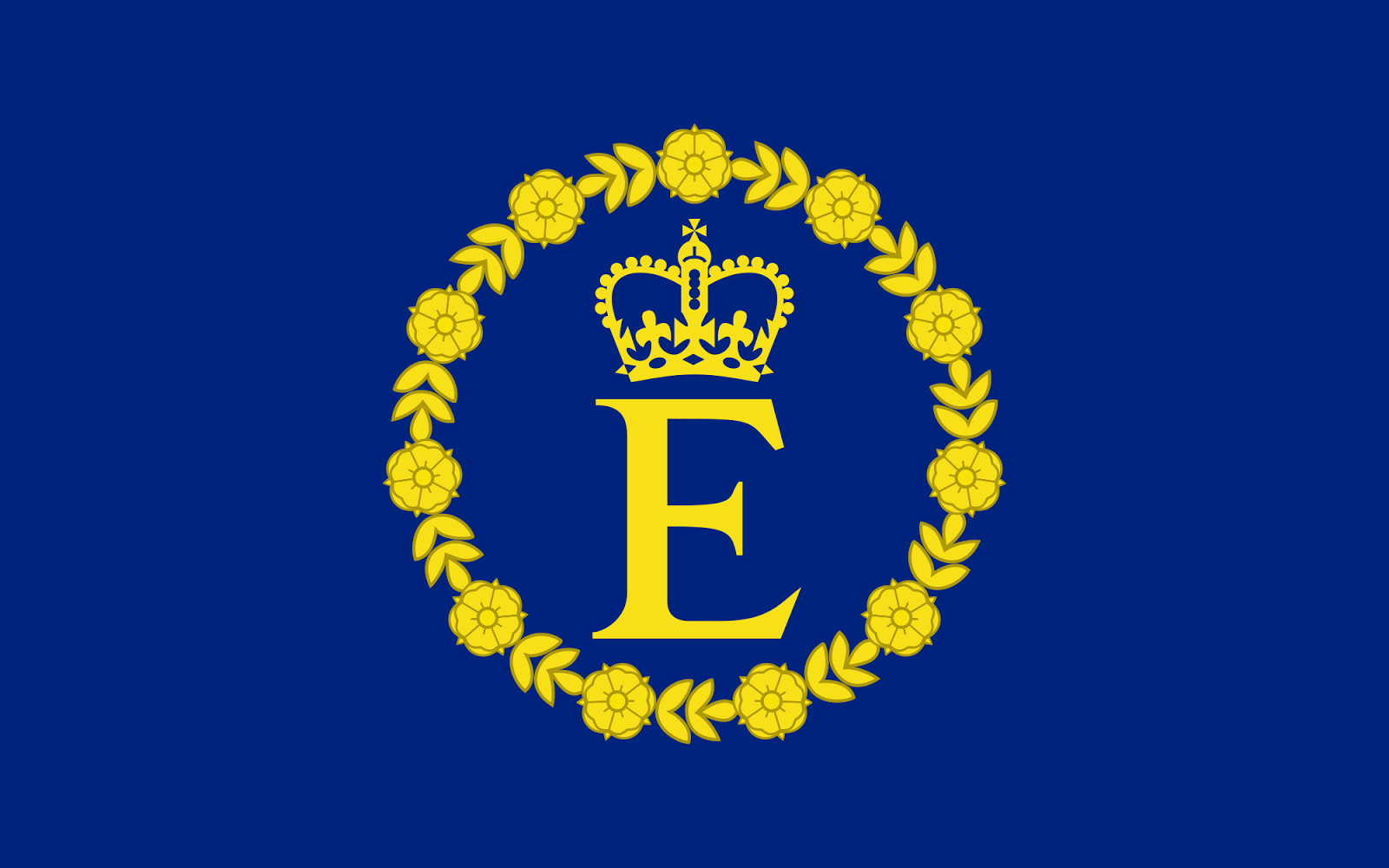 |
| The personal flag of Elizabeth II which she uses in her role as Head of the Commonwealth, especially when traveling in Commonwealth countries that are not realms of the Crown. |
The
Prince of Wales’s appearance at the CHOGM can therefore be seen as preparing
the ground for him to succeed to his mother’s title. His address opening the
summit was not so much a campaign speech as it was a declaration of his hopes
and aspirations for the future of the Commonwealth. The speech was also his own
statement of support for the organization, which he praised for its ability to evolve to meet the needs of its members. Charles called on the nations of the
Commonwealth to increase cooperation in creating solutions to vital issues such
as poverty, climate change, economic development, and connectivity among
people. He invoked the aforementioned Jawaharlal
Nehru (with whom he shares a birthday), who believed that the Commonwealth
ought to provide a “touch of healing” to solving the problems facing the modern
world. Avoiding any direct mention of the political issues currently swirling
around Sri Lanka, the Prince instead praised the island nation for its strength
and character following the 2004 tsunami.
Respecting the delicate balance of tense political issues is part of the job for the Head of the Commonwealth, who must represent unity and be above the fractious political fray. While the politicians in attendance (including Prime Minister Cameron) were seen jeered and heckled by some protesters, Charles and Camilla received a warm reception. The closest encounter with politics occurred behind the scenes in the form of the one-on-one discussions the Prince had with each of the prime ministers and presidents – just as the Queen would do if she had been there.
Respecting the delicate balance of tense political issues is part of the job for the Head of the Commonwealth, who must represent unity and be above the fractious political fray. While the politicians in attendance (including Prime Minister Cameron) were seen jeered and heckled by some protesters, Charles and Camilla received a warm reception. The closest encounter with politics occurred behind the scenes in the form of the one-on-one discussions the Prince had with each of the prime ministers and presidents – just as the Queen would do if she had been there.
Later at the banquet – held in a ballroom named the King’s Court – Prince Charles shared his personal connections with the Commonwealth and its people, such as when Kwame Nkrumah of Ghana gave Charles a set of bow-and-arrows, and he had the audience in laughter over a story about water-skiing with Dom Mintoff from Malta (which was announced as the host for the next CHOGM in 2015).
The banquet and the opening ceremony also featured the appearance of the Commonwealth Mace, a gift given to the Queen by the Royal Anniversary Trust in 1992 upon the occasion of the 40th year of her accession. With 18 karats of gold and the enameled flags of the Commonwealth countries decorating it, the mace appears to represent the power of the Crown at an organization where the top job is technically not a Crown office.
Nevertheless, before this summit, leaders were
already expressing some support for continuing the link with the Crown.
Back in
March, the then Australian Prime Minister, Julia Gilliard, gave her own tribute
to the Queen, and stated that she was “sure the Queen’s successor as monarch will one day serve as
Head of the Commonwealth with the same distinction as Her Majesty has done.” On
Commonwealth Day that month, Commonwealth Secretary-General Kamalesh Sharma
acknowledged the Queen’s service as the Head of the Commonwealth, applauded
Charles’ role in the organization, and elaborated on “a foundation of friendship and continuity”
in association with the royal family. He also stated that the “Crown has
symbolized the free association of our nations and our peoples.” In her response, the Queen said that she appreciated the
“kind and generous sentiments, and for [the] thoughtful words about the link
between the Crown and the Commonwealth and its enduring value.” At the
Commonwealth banquet, Sharma
went on to say that the support given by Prince Charles “deepens the
Commonwealth’s links to the Crown. Such heartfelt enthusiasm brings a
foundation of friendship and continuity.”
.jpg) |
| Julia Gilliard, the Queen's 12th Australian Prime Minister, who was also the first female prime minister of the country. |
The Commonwealth – this club of former imperial
relations means a lot to the Queen, who has done much to keep it together in
spite of squabbles between members (especially during the disputes with South
Africa's apartheid policy). The bi-annual summit helps to bring the peoples of
the far-flung Commonwealth together and to achieve greater cooperation and
understanding amongst each other, resulting in ever-closer relationships among
peoples and their respective countries. It is also a celebration of
commonly-shared aspirations and values, as well as the hopes for a brighter
future in voluntary association with one-another. It is the Queen, as Head of
the Commonwealth, who helps to provide a sense of stability and continuity for
the organization and its people, which helps to strengthen deep bonds. Commonwealth leaders have expressed their desire to stay together and to use the organization as a vehicle for providing assistance to countries like Sri Lanka that are through political and social difficulties.
 |
| Kamalesh Sharma, the Commonwealth Secretary-General. |
And
with his presence at the CHOGM, Charles may have gone a long way in carrying on
his mother’s legacy by securing the position of Head of the Commonwealth when
his time comes.
Photo Credit: GovernmentZA via Flickr cc, Bastin8 via Wikimedia Commons cc, Foreign and Commonwealth Office via Flickr cc, DilatoryRevolution via Wikimedia Commons cc
Sources:
Photo Credit: GovernmentZA via Flickr cc, Bastin8 via Wikimedia Commons cc, Foreign and Commonwealth Office via Flickr cc, DilatoryRevolution via Wikimedia Commons cc
Sources:
- Hardman, Robert. Her Majesty: Queen Elizabeth and Her Court. New York: Pegasus Books. 2012. Print (Page 336).


