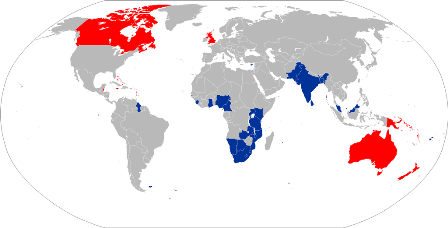
On this day in 1952, Elizabeth II ascended to the thrones of the United Kingdom and the Commonwealth. Here is a timeline of significant events in her reign from that period to the present.
 |
| Queen Elizabeth on a visit to the USA in 2007. |
The Fifties
1952
February 6: The Queen accedes to the throne upon the death
of her father, George VI. She and her husband, Philip, Duke of Edinburgh were
in Kenya on the first leg of a tour of the Commonwealth when the news was
broken to her, and she immediately returned to Britain.
In her Accession year, the Queen participated in her first
Trooping the Color and her first State Opening of Parliament as a reigning
monarch. She also traveled across country, with her first regional visit being a
three day engagement in Northern Ireland.
1953
March 24: Queen Mary, the wife of George V and grandmother
of Elizabeth II dies at the age of 85 at Marlborough House in London. In
accordance to her wishes, the coronation that year was not delayed.
April 16: The Queen launched the Royal Yacht Britannia at the John Brown Shipyard in
Clydebank, Scotland, UK.
June 2: The Coronation of Elizabeth II took place
Westminster Abbey, where she was crowned Queen of the United Kingdom of Great
Britain and Northern Ireland, and of her other realms and territories across
the Commonwealth. This was the first coronation to be televised.
Along with the Duke of Edinburgh, the Queen embarked on a
six month tour of the Commonwealth, part of which was aboard the
newly-commission Royal Yacht Britannia.
She became the first reigning monarch to visit New Zealand, and delivered her
annual Christmas Day broadcast that country.
1954
February 3: During the Commonwealth tour, Elizabeth II
became the first reigning monarch to visit Australia. About ¾ of Australians
turned out to meet her.
During the tour they Queen and the Duke also visited
Bermuda, Jamaica, Fiji, Tonga, Ceylon (now Sri Lanka), Uganda, Malta and
Gibraltar. It was the first time a reigning monarch had visited many of these
countries as well.
1955
April 7: Winston Churchill resigns as Prime Minister of the
United Kingdom and the Queen appoints his successor, Anthony Eden.
1956
Under Prime Minister Eden, Britain and France unsuccessfully
attempted to retake the Suez Canal from Egypt. The Queen was said to have
believed that Eden was mad for participating in the scheme.
1957
January 10: Prime Minister Eden resigns in the wake of the
Suez Crisis, and the Queen appoints Harold Macmillan as his successor.
February 22: In a show of appreciation for her husband
Philip taking a solo tour of the Commonwealth, the Queen granted him the title
and style of a Prince of the United
Kingdom. Ten years previously, he had given up his Greek and Danish royal titles
to become HRH Philip Mountbatten, Duke of
Edinburgh for the purpose of marrying then Princess Elizabeth. He became
known as HRH The Prince Philip, Duke of
Edinburgh.
In this year, the Queen made a state visit to the United
States and addressed the UN General Assembly in New York. She was also became
the first Canadian monarch to open a parliamentary session when she opened the
23rd Parliament of Canada.
1958
In this year, the Queen ended the formal presentation of
debutantes at Buckingham Palace and increased the number of garden parties from
three to four per year.
1959
In this year, Elizabeth II, Queen of Canada and US President
Dwight Eisenhower inaugurated the St. Lawrence Seaway in Quebec with a ride
aboard the Royal Yacht Britannia,
which ended up in Chicago, and Elizabeth became the first reigning Canadian
monarch to visit the city.
The Queen also missed
the annual State Opening of Parliament due to being pregnant with her third
child.
The Sixties
1960
February 19: The Queen gives birth to Prince Andrew at
Buckingham Palace, becoming the first monarch to have a child while on the
throne since Queen Victoria had her youngest child, Princess Beatrice in 1857.
May 6: The Queen attends the marriage of her sister
Princess Margaret to photographer Antony Armstrong-Jones at Westminster Abbey
1961
In this year, the Queen she toured Cyprus, India, Pakistan,
Nepal, Iran, and Ghana.
She and Prince Philip also met President John F. Kennedy and
First Lady Jacqueline Kennedy at Buckingham Palace, where they shared a private
dinner.
The Queen also visited Rome, where she met Pope John XXIII.
1962
At Prince Philip’s suggestion, the Queen opened a public
gallery at Buckingham Palace to display items from the Royal Collection.
In an example of more relaxed royal visits, the Queen and
the Duke paid an informal visit to London’s East End, where they visited the
housing redevelopments in Bethnal Green and Stepney, and meet a family in their
new home.
1963
October 18: Prime Minister Harold Macmillan resigned as a
result of illness, and the Queen appointed Alec Douglas-Home as his successor.
The Queen misses the annual State Opening Parliament for the
second and final time in her reign due to being pregnant with her fourth child.
1964
March 10: Prince Edward is born at Buckingham Palace, and
is the last child of the Queen and Prince Philip.
October 16: Prime Minister Douglas-Home and his
Conservative Party are defeated in the UK General Election by Harold Wilson and
the Labour Party. He resigns and the Queen appoints Wilson as her first Labour
Prime Minister.
1965
January 30: The Queen attended the state funeral of former
UK Prime Minister and wartime leader, Sir Winston Churchill at St. Paul’s
Cathedral in London.
In this year, the Queen history by being the first British
monarch to visit Germany in 52 years and toured the Berlin Wall.
She also delivered her first Commonwealth Day message via a
broadcast.
1966
The Queen and the Duke embarked on a tour of Commonwealth
countries in the Caribbean, which included visits to the Bahamas, Jamaica,
British Guiana (now Guyana), the Cayman Islands, Trinidad and Tobago, the
British Virgin Islands, and several others. Some of these countries had become
independent during the 1960’s, but retained the Queen as head of state.
1967
July 1: On Parliament Hill in Ottawa, Canada, the Queen
addressed her Canadian subjects on the centennial of the formation of Canada as
a single nation.
September 20: The Queen launches the hull of the Cunard
ocean liner, the RMS Queen Elizabeth 2
at the John Brown Shipyard in Clydebank, Scotland, UK.
1968
Following the Summer Olympics in Mexico City, the Queen
hosted a reception at Buckingham Palace for the returning British Olympians.
Also in attendance were several members of the Royal family – including the
Queen Mother and Princess Margaret.
1969
July 1: Prince Charles is formally invested as Prince of
Wales by paying homage to the Queen at a ceremony in Caernarfon Castle, which
was rendered in English and Welsh, and was watched by a global audience of over
200 million.
On Christmas Day, the documentary Royal Family was aired. It featured the family life and off-duty
activities of the Queen and her family, and was watched by over 23 million
people in the United Kingdom. Because of this and the investiture of Prince
Charles, the Queen decided not to deliver a Christmas Day broadcast – the only
time she has done so in her reign.
The Seventies
1970
June 19: Prime Minister Wilson and his Labour Party are
defeated in the General Election by Edward Heath and the Conservatives. Wilson
resigns and the Queen appoints Heath as his successor.
In this year, Elizabeth II initiated a new royal practice
while visiting Australia and New Zealand. Known as the walkabout, it has
allowed her and other members of the family to meet as many people as possible.
1971
The Queen received Emperor Hirohito of Japan on his first
state visit to the United Kingdom since before World War II.
1972
November 20 – Elizabeth II and Prince Philip celebrated 25
years of marriage with a service of thanksgiving at Westminster Abbey.
During this year, the couple also paid a visit to communist
Yugoslavia, making the Queen to first British monarch to do so.
1973
January 1: The Queen presides over the UK’s accession to
membership within the European Economic Community, the forerunner to the
European Union.
November 14: Princess Anne - the Queen’s only daughter –
marries Lieutenant Mark Phillips in a ceremony at Westminster Abbey which was
attended by the Queen and other members of the royal family, and watched by a
global television audience of around 100 million people.
1974
February: The Queen flies back to the UK from an Australian
tour when British Prime Minister Edward Heath advised her to call for a General
Election.
March 4: The General Election resulted in a hung parliament
in which no party had an outright majority in the House of Commons. Harold
Wilson and the Labour Party emerged with the largest number of seats, but Heath
and the Conservatives attempted to form a majority government via a coalition
with the Liberal Party. This failed, and Heath tendered his resignation to the
Queen, who then appointed Wilson to his second term as Prime Minister.
1975
November 11: The Queen faced the biggest constitutional
crisis of her reign, though not in Britain. Down Under in Australia, the Labor
Party government (which had a majority in the House of Representatives) under
Prime Minister Gough Whitlam was engaged in a budgetary standoff with Malcolm
Fraser and the opposition Liberal Party (which had a majority in the Senate).
When the federal government went unfunded, the Queen’s Australian
representative, Sir John Kerr dismissed Whitlam at 1:15 PM and replaced him
with Fraser. Within four hours, Fraser pushed through a spending bill to fund
the government, and Governor-General Kerr dissolved Parliament and called for
fresh elections, which eventually resulted in Fraser and the Liberals attaining
a majority in both houses.
In this year, the Queen also made history by becoming the
first British monarch to pay a state visit to Japan, where she was received by
Emperor Hirohito.
1976
April: This year witnessed the sudden resignation of British Prime
Minister Harold Wilson. The Labour Party elected James Callaghan as its new
leader, and the Queen appointed him as Prime Minister on April 5th.
July 6-11: The Queen and the Duke of Edinburgh toured the United States
during a special state visit to celebrate the nation’s Bicentennial. Aboard the
Royal Yacht Britannia, they made
stops in Pennsylvania, Washington, D.C., Virginia, New York, Connecticut, Rhode Island and
Massachusetts – attending several Bicentennial festivals along the way. Some
events were attended in the company of President Gerald R. Ford and First Lady
Betty Ford, who hosted a Bicentennial dinner in honor of the Queen and Prince
Philip on July 7th. There, the Queen and President Ford toasted each
other and shared a dance. On behalf of the British people, the Queen also
presented the Bicentennial Bell – a replica of the Liberty Bell and cast from
same foundry at Whitechapel – in Philadelphia. It bears the inscription: “For
the People of the United States of America from the People of Britain 4 July
1976 LET FREEDOM RING.”
On July 17th, Elizabeth II, Queen of Canada opened
the 1976 Montreal Olympics.
1977
The Queen marked her 25th year on the throne with the Silver
Jubilee. Included through the year were a nationwide tour of the United Kingdom
and of the Commonwealth, with the Queen and Prince Philip traveling a total of
56,000 miles. On June 7th, Jubilee Day was marked by a bonfire
chain, public holiday, and a National Service of Thanksgiving at St. Paul’s
Cathedral in London. The Queen also delivered a personal address to both Houses
of Parliament at Westminster Hall, in which she states that she had no regrets
about the promises she made in her younger years to serve her peoples. With
regard to Britain, she made it clear – in the face of Scottish and Welsh
nationalism, and the Troubles in Northern Ireland – that she had been crowned
Queen of the United Kingdom of Great Britain and Northern Ireland.
In this year, the Queen also welcomed President Jimmy Carter
to the United Kingdom for a state visit.
November 15: The Queen becomes a grandmother for the first
time when Peter Phillips was born at St. Mary’s Hospital in Paddington, West
London. Phillips is the eldest son of Princess Anne and Mark Phillips, and at
the time of his birth, he was 5th in line to the thrones of the
Commonwealth realms.
1978
The Queen hosted a state visit in the UK for Romania’s
Communist dictator, Nicolae Ceaușescu, and his wife, Elena. According to
courtiers, the Queen believed that they had "blood on their hands."
1979
March 28: Prime Minister Callaghan is defeated in the House
of Common with a vote of no confidence, and asks the Queen to call for a
General Election.
May 4: The General Election results in a defeat for
Callaghan’s Labour Party and a victory for Margaret Thatcher and the
Conservatives. On this day, the Queen appoints Thatcher as the first female
Prime Minister of the United Kingdom.
August 27: Lord Louis Mountbatten, a cousin of the Queen and
uncle of Prince Philip is assassinated by the Provisional Irish Republican Army
(IRA) while out on his boat off the coast of the Republic of Ireland.
Mountbatten was also a mentor to Prince Charles and his loss was felt by entire
Royal family.
Also in this year, the Queen made history by becoming the
first British monarch to travel to the Middle East.
The Eighties
1980
The Queen meets Pope John Paul II at the Vatican.
1981
May 15: Princess Anne gives birth to her second child and
only daughter, Zara Phillips, at St. Mary’s Hospital in London. Phillips is the
Queen’s eldest granddaughter and at the time of her birth, she was 6th
in line to the Commonwealth thrones.
June 13: During the annual Trooping the Color ceremony, six
black shots were targeted at the Queen by an assailant named Marcus Sarjeant as
the Queen made her down the Mall to Horse Guard’s Parade. Her horse Burmese was
alarmed by the shots, but the Queen quickly and skillfully calmed her down, and
went on with the ceremony.
July 29: The Queen attends the marriage ceremony of her
eldest son and heir, Prince Charles, Prince Wales to Lady Diana Spencer at St.
Paul’s Cathedral in London, which was watched by a global television audience
of over 750 million.
1982
April 2 – June 14: Under Prime Minister Thatcher, British
forces are sent to retake two British Overseas Territories that had been
invaded by Argentina: the Falkland Islands, and South Georgia and the South
Sandwich Islands. The conflict was deeply personal for the Queen, not only as
Head of the Armed Forces, but also as the mother of a serviceman, Prince
Andrew, who served as a Royal Navy helicopter pilot. After ten weeks, Britain
emerged victorious and recovered the islands.
June 21: Prince William of Wales is born at St. Mary’s
Hospital in Paddington, West London. William is the eldest son of Prince
Charles, Prince of Wales and Diana, Princess of Wales, as well as the Queen’s
third grandchild. He is second in line
to the thrones of the Commonwealth realms.
During this year, the Queen hosted President Ronald Reagan
at Windsor Castle for a state visit to the UK. Elizabeth II also made history
when she – as Supreme Governor of the Church of England – received Pope John
Paul II at Buckingham Palace, and he became the first Catholic pontiff to visit
Britain in 450 years.
This year was also one of constitutional development for the
Queen. On March 29, she gave Royal Assent to the Canada Act, 1982, which had
been passed by the Parliament of the United Kingdom and ended the last vestiges
of British constitutional and political power over Canada by “patriating” its
Constitution. As Queen of Canada, Elizabeth II signed a proclamation bring this
act, as well as the Constitution Act, 1982 into force at a ceremony on
Parliament Hill in Ottawa on April 17th.
1983
February: As Queen of Jamaica, Elizabeth II opened a new
session of the Jamaican Parliament on the 21st anniversary of that
country’s independence from the United Kingdom.
February 26 - March 6: The Queen also paid a state visit to the United States, where she
and Prince Philip were guests at Rancho
del Cielo, President Reagan’s Californian ranch.
However, she was less enthused
with Reagan when he ordered an invasion of Grenada (one of her realms) later
that year to remove a military dictatorship without first notifying her.
1984
September 15: Prince Harry of Wales is born at St. Mary’s
Hospital in Paddington, West London. The second son of the Prince and Princess
of Wales, he is also the Queen’s fourth grandchild, and at the time of his
birth, he was third in line to the throne of the Commonwealth realms.
1985
During this year, the Queen visited St. Lucia, another one
of her Caribbean realms.
1986
March 2: Elizabeth II, Queen of Australia signed a
proclamation at Government House in Canberra which stating that the Australia
Act that was passed in the Australian Parliament would take effect at 5:00AM
GMT, at the same time that similar legislation passed by the UK Parliament
would also take effect. These two acts ended the remnants of the UK’s
constitutional power over Australia.
July 23: The Queen attends the marriage of her third child,
Prince Andrew to Sarah Ferguson in a ceremony at Westminster Abbey that was
watched by a global audience of around 500 million people. On the morning of the
wedding, the Queen granted Andrew the titles Duke of York, Earl of Inverness,
and Baron Killyleagh, and upon marriage, Sarah became the Duchess of York,
Countess of Inverness, and Lady Killyleagh.
October 12 - 18: The Queen and Duke of Edinburgh visit the People's Republic of China, where they made stops in Beijing, Shanghai, and the Great Wall.
December 13: Elizabeth II, Queen of New Zealand gives Royal
Assent to the Constitution Act, 1986, which removed the last remaining
constitutional association between New Zealand and the British Parliament.
1987
During this year, the Queen lent support for the
controversial Meech Lake Accord, a package of amendments to the Canadian
Constitution that was put together to get French-speaking Quebec to agree to
the aforementioned Constitution Act, 1982.
1988
May 9: Elizabeth II, Queen of Australia opened the new
Parliament House in Canberra, while on a tour of Australia to celebrate its
bicentennial. It was the anniversary of the opening of the first Federal
Parliament in Melbourne by the her grandfather in 1901, as well as the opening
of the Provisional Parliament House in Canberra by her father in 1927.
August 8: Princess Beatrice of York is born to the Duke and
Duchess of York at Portland Hospital in London. She is the Duke and Duchess’s
first child, as well as the Queen’s fifth grandchild, and at the time of her
birth, she was 5th in line to the Commonwealth thrones.
1989
For the annual Christmas broadcast, the Queen delivered her
address before a gathering of 2,000 children at the Royal Albert Hall in
London, as part of a gala organized by Save the Children, of which Princess
Anne is President. This was the only time the Christmas message has been heard
by an audience before its international release, and after its conclusion, the
Queen and Princess Anne spend some time with the children and answered
questions from them.
The Nineties
1990
March 23: Princess Eugenie of York is born at Portland
Hospital in London. She is the second child of the Duke and Duchess of York, as
well as the Queen’s sixth grandchild. At the time of her birth, she was 6th
in line to the Commonwealth thrones.
November 28: After three General Election victories and eleven
years in power, Margaret Thatcher resigned as Prime Minister of the United
Kingdom. The ruling Conservative Party elected John Major as its new leader,
and Queen Elizabeth appointed him as Thatcher’s successor in 10 Downing Street.
In this year, the Queen took part in events marking the 50th
anniversary of the Battle of Britain, including attending a fly-past and
reviewing a parade of Royal Air Force (RAF) units and veterans.
1991
January: Under Prime Minister Major, British military units
took part in the US-led Operation Desert Storm to remove Iraqi occupation
forces in Kuwait, which ended victoriously within months.
Following this successful campaign, the Queen and Prince
Philip went on a tour of the United States, were they were welcomed by
President George H.W. Bush. Among other things, they attended a baseball game
where the President explained to them how the game is played. On May 17th,
she became the first British monarch to address the US Congress.
1992
1992 was the infamous annus
horribilis of the Queen’s
reign:
- March: The Duke and
Duchess of York announce that they are separating, and topless photos of
the Duchess with a named John Bryan are released to the public via
tabloids.
- April: Princess Anne
divorced her husband, Captain Mark Phillips
- June: Diana, Her True
Story – a tell-all book about
Diana and her lift within the Royal family
- Secret tapes revealing the nature of the extramarital affairs of
Charles and Diana are leaked to the public.
- November 20: Windsor Castle catches fire and is seriously damaged,
and a public uproar ensues over the idea of taxpayers funding the repairs.
- December: Prime Minister Major announces that the Prince and
Princess of Wales are separating.
The year also
marked the 40th anniversary of the Queen’s accession, and was marked
with the release of Elizabeth R, a documentary about her day-to-day working
life. It was also marked by questions about the Queen’s personal wealth,
especially in the wake of the Windsor Castle fire. In December, it was
announced that royal finances would be reformed, with the Queen paying income
tax on her private income and accepting a reduction in her state funding, known
as the Civil List. In a speech at the London Guildhall on November 24th,
she remarked that any institution must expect criticism, but opined that
it be done with "a touch of humor, gentleness and understanding."
On December 12th, the Queen attended the wedding ceremony of
Princess Anne, who married her second husband, Commander Timothy Laurence at Crathie
Kirk, near Balmoral Castle in Scotland.
1993
The Queen allows
the state-owned royal palaces (including Buckingham Palace) to be opened to
fare-paying visitors when the royal family is not is residence to help pay for
the repairs to Windsor Castle.
1994
The Queen sails to Normandy aboard the Royal Yacht Britannia
for the 50th anniversary commemorations of the D-Day landings, and
pays a visit to Russia.
1995
March: The Queen travels to South Africa for a state visit
at the invitation of President Nelson Mandela. It was the first time the Queen
has been to South Africa since 1947, when she was a Princess.
May: To commemorate the 50th anniversary of V-E
Day (the end of World War II in Europe), the Queen addressed both Houses of
Parliament in Westminster Hall, and along with the Queen Mother and other
members of the Royal family, appeared on the balcony of Buckingham Palace
before a large crowd to witness of fly-past.
1996
May 30: Divorce of the Duke and Duchess of York is
finalized.
July: Nelson Mandela makes an historic return state visit to
the United Kingdom at the invitation of the Queen.
August 28: Divorce of the Prince and Princess of Wales is
finalized. Days before the divorce settlement, the Queen issued Letters Patent
stipulating that divorced wives of princes ceased to have the status of Royal
Highness, and Diana went from being officially titled Her Royal Highness The Princess of Wales to Diana, Princess of Wales. Sarah, Duchess of York, who had retained
her Royal Highness status upon divorce from Prince Andrew in May, also had that
status removed.
1997
March 6: At Kingsbury High School in Brent, London, the
launches the monarchy’s official website.
May 2: Prime Minister John Major and his Conservative Party
are defeated in the General Election by Tony Blair and the Labour Party. The
Queen appoints Blair as Major’s successor in Downing Street.
August 31: Diana, Princess of Wales was killed in an
automobile accident in Paris, France. During the week, the Queen kept princes
William and Harry at Balmoral to shield them from the media. As time went on
however, she and the Royal family were criticized for not publicly mourning and
for failing to fly a flag at half-mast at Buckingham Palace in memory of Diana.
Eventually, the Queen returned to London with her grandsons and addressed the
British nation and the world with a message in which she expressed her feelings
as a “Queen and as a grandmother,” and paid tribute to Diana and her legacy.
September 6: The Queen attends Diana’s funeral at
Westminster Abbey. Millions of people lined the procession route in London, and
the Queen and other members of the Royal family bowed her head in respect as
Diana’s coffin passed Buckingham Palace. While the Queen was not in residence at the Palace, the Union Flag flew at half-mast from Palace’s flagpole.
November 20: The Queen and Prince Philip celebrate their
Golden wedding anniversary. In a speech regarding their marriage, the Queen
named Philip as her “strength and stay.” At Buckingham Palace, a special garden
party was held for other couples also celebrating their Golden anniversaries.
December 11: Her Majesty’s Yacht (HMY) Britannia was
decommissioned after 43 years of service at the Portsmouth Naval Base in the
presence of the Queen and other members of the Royal family. It was an
emotional sendoff, and the Queen was seen shedding a tear as the Naval ensign
was lowered for the last time.
1998
November 24: During the State Opening of Parliament, the
normal silence observed during the reading of the Queen’s Speech was
interrupted when the Queen announced the Government’s plan to abolish the right
of hereditary peers to sit in the House of Lords. This produced vocally
positive reactions from some members of the Commons, and negative reaction from
the Lords. Yet the Queen kept reading and ignored the shouts in the chamber.
1999
May 27: The devolved National Assembly for Wales is opened
for the first time by the Queen, who welcomed it as "a bridge into the
future" for Wales and the United Kingdom.
June 19: Prince Edward marries Sophie Rhys-Jones in a
ceremony in St. George’s Chapel at Windsor Castle that was watched by over 200
million people. The Queen was in attendance and on that morning, she granted
Edward the titles Earl of Wessex and Viscount Severn, with the promise that he
would become Duke of Edinburgh upon the deaths of both of his parents.
July 1: The Queen formally opens the devolved Scottish Parliament
in its temporary home in Edinburgh. Along with the Duke of Edinburgh and the
Duke of Rothesay, she was carried in a carriage with an escort provided by the
Household Cavalry through the streets of Edinburgh from the Palace of
Holyroodhouse (her official residence in Scotland) to the new parliament. In
her speech to the assembled MSP’s, she stated the new Scots Parliament marked “the
threshold of a new constitutional age" for the United Kingdom.
December 31: Elizabeth II opens the Millennium Dome in
Greenwich, London and helps to ring in the new millennium alongside Prince
Philip, other members of the Royal Family, Prime Minister Tony Blair, and other
VIP’s.
The New Millennium
2000
August 4: Queen Elizabeth The Queen Mother celebrates her
100th birthday. Like other centenarians, she receives a
congratulatory telegram from her daughter, the Queen. She also appeared on the
balcony of Buckingham Palace alongside her daughters, Elizabeth and Margaret,
and other member of the Royal family to the acclaim of large crowds below.
2001
September 14: The Queen leads the British nation in mourning
at a memorial service at St. Paul’s Cathedral following the September 11th
terrorist attacks on the United States. By special permission of the Queen, the
US National Anthem was played during the Changing of the Guard ceremony at
Buckingham Palace.
2002
February 9: Princess Margaret, Countess of Snowdon, dies
aged 71 as a result of a stroke at the King Edward VII Hospital in London. The Queen and other members of the Royal family
attend the funeral of her sister in a private ceremony at St. George’s Chapel,
Windsor on February 15th.
March 30: Queen Elizabeth The Queen Mother dies aged 101 at
Royal Lodge in Windsor Great Park with her daughter the Queen at her side. At
the time of her death, she was the longest-lived member of the Royal family in
British history.
April 9: Elizabeth II, members of the Royal family and
invited guests attend the funeral of the Queen Mother at Westminster Abbey.
More than a million people filled the area around the Abbey in Central London,
and along the procession route to her final resting place beside her husband,
George VI and her younger daughter Princess Margaret at St. George’s Chapel in
Windsor Castle.
Despite these bereavements, 2002 was also the year of the
Golden Jubilee, and the Queen marked her 50 years on the throne by embarking on
a year-long program that included visits to Jamaica, New Zealand, Australia and
Canada, as well as a 70-city tour of the United Kingdom. In June, she and
millions of her people celebrated the three-day Jubilee Weekend in London, which
included two live concerts at Buckingham Palace, a National Service of
Thanksgiving at St. Paul’s Cathedral, and an appearance on the Palace balcony
with other a members of the Royal Family.
2003
November 8: Lady Louise Mountbatten-Windsor is born at
Firmley Park Hospital in Surrey. She is the first child and only daughter of
Prince Edward, Earl of Wessex and Sophie, Countess of Wessex, and is the Queen’s
seventh grandchild. At the time of her birth, she was eighth in the line of
succession.
2004
January 8: The Queen christens the Cunard liner RMS Queen Mary 2 at a ceremony in
Southampton, England, UK. The QM2 is
the first ocean liner to be built since the Queen
Elizabeth 2, which the Queen had also christened in 1967.
2005
July 8: The Queen paid a visit to victims of the July 7th
London bombings at the Royal London Hospital. There, she delivered what the BBC
termed an “unusually forthright” speech, in which she declared that "those
who perpetrate these brutal acts against innocent people should know that they
will not change our way of life." Two days later, she ordered the Union
Flag to be flown at half-mast.
2006
April 21: On her 80th birthday, the Queen
celebrated with a public walkabout in Windsor’s town center, and hosted a lunch
for other people celebrating their 80th birthday on the same day. At
Kew Palace, she enjoyed a dinner with her family.
2007
May 2007: The Queen attends a state visit in the United States,
which includes a state dinner at the White House at the invitation of President
George W. Bush. She also took part in
the 400th anniversary celebrations of the first permanent British
colonial settlement of Jamestown, Virginia.
June 27: After three General Election victories and ten
years in power, Tony Blair resigns as Prime Minister. Gordon Brown is elected
leader of the Labour Party, and the Queen appoints him as Blair’s successor.
November 20: The Queen and the Duke of Edinburgh marked
their 60th wedding anniversary. They attended a Service of Celebration
at Westminster Abbey and unveiled the Jubilee Walkway at Parliament Square.
December 17: James Mountbatten-Windsor, Viscount Severn is
born at Firmley Park Hospital in Surrey to the Earl and Countess of Wessex. He
is their second child and only son, and is the Queen’s eighth and final
grandchild. At the time of his birth, he was eighth in the line of succession,
displacing his older sister who slipped to ninth.
2008
March 20: For the first time in history, the Royal Maundy
Service near Easter is held outside of England and Wales. The Queen attends the
ancient service at St. Patrick’s Cathedral in Armagh, Northern Ireland.
May 17: Peter Phillips, the Queen’s eldest grandchild, is
married to Autumn Kelly at a private ceremony held in St. George’s Chapel,
Windsor. Phillips is the only son of Princess Anne and her first husband,
Captain Mark Phillips.
2009
May: The Queen and Duke of Edinburgh meet President Barack
Obama and First Lady Michelle Obama during the G20 Summit being hosted by
Britain. During a reception, the Queen and the First Lady were seen gently
embracing each other for a moment, which caused somewhat of a stir in royal
circles and in the press.
2010
May 11: The General Election of 2010 results in a hung
parliament in which no party has an outright majority in the House of Commons.
David Cameron and the Conservatives have the largest number of seats, and
eventually teamed up with Nick Clegg and the Liberal Democrats to create a
governing coalition with a parliamentary majority. Gordon Brown, the incumbent
Prime Minister, tenders his resignation to the Queen, who then appoints Cameron
as his successor.
June and July: Elizabeth II, Queen of Canada embarks on a
tour of the country, which included stops in Nova Scotia, Winnipeg, Toronto,
and Ottawa, where she delivered a speech to her people from Parliament Hill on
Canada Day. The Queen also made a stop in New York City, where she addressed the
United Nations General Assembly as Head of the Commonwealth and as Queen of all
of the Commonwealth realms. She also laid a wreath at the World Trade Center
site, and officially opened a memorial garden to British victims of the September
11th attacks.
December 29: The Queen becomes a great-grandmother for the
first time when Savannah Phillips is born at the Royal Gloucestershire Hospital
to Peter and Autumn Phillips. She is their first child, as well as Princess Anne’s
first grandchild, and at the time of her birth, she was 12th in the
line of succession.
2011
April 29: Prince William marries Catherine Middleton in a
ceremony at Westminster Abbey that was attended by the Queen, members of the
Royal family, other invited guests, and was watched by a global audience of
around 2 billion people across various media platforms. On the morning of the
wedding, the Queen granted William the titles Duke of Cambridge, Earl of Strathearn, and Baron Carrickfergus.
Upon marriage, Catherine became Duchess
of Cambridge, Countess of Strathearn, and Lady Carrickfergus.
May 12: By one day, the Queen overtakes George III as the
second-longest reigning monarch in British history.
May 17-20: The Queen and the Duke of Edinburgh make a state
visit to the Republic of Ireland, which was the first visit by a British
monarch to the area now known as the Irish Republic since the royal visit in
1911 by her grandparents, George V and Queen Mary when all of Ireland was part
of the United Kingdom. She visited places to significance to Irish republicanism,
and at the state dinner held in her honor at Dublin Castle, the first line of
her speech was delivered in Irish. She expressed sympathy for the complex and
sometimes troubling history between Britain and Ireland, but also spoke of the
normalization of relations between the two countries and the progress of the peace
settlement in Northern Ireland. The speech was widely praised by people from
virtually all political persuasions.
May 24-26: President Barack Obama and First Lady Michelle
Obama make a state visit to the United Kingdom at the invitation of the Queen.
July 30: Zara Phillips, the Queen’s eldest granddaughter, is
married to Mike Tindall. The Queen and other members of the Royal Family were
in attendance for the ceremony at the Canongate Kirk in Edinburgh. Phillips is
the second child and only daughter of Princess Anne.
October: The Queen and the Duke of Edinburgh visit Australia
to tour the country and to attend the Commonwealth Heads of Government Meeting
in Perth. During the meeting, it was announced that the 16 Commonwealth realms
where the Queen is head of state will change their succession laws to eliminate
male preference in the line of succession and to allow people within the
succession to marry Roman Catholics without jeopardizing their place. Because
of the Queen’s age, the press described this visit as her “farewell tour.”
2012
February 6: The Queen marked the 60th anniversary
of her accession to the throne. The Diamond Jubilee was celebrated throughout
the year, with the Queen and Prince Philip visiting many parts of the United
Kingdom and members of the Royal Family representing the Queen abroad in all of
her overseas realms and in other Commonwealth countries, Crown Dependencies,
and British Overseas Territories.
March 29: Isla Phillips is born at the Royal Gloucestershire
Hospital to Peter and Autumn Phillips. She is their second child, as well as Princess
Anne’s second grandchild, and the Queen’s second great-grandchild. At the time
of her birth, she was 13th in the line of succession.
June 2-5: During the Jubilee weekend in June, celebrations
included the Diamond Jubilee Pageant on the River Thames, a large concert
around the Victoria Memorial in front of Buckingham Palace, and the National
Service of Thanksgiving at St. Paul’s Cathedral.
July 27: The Queen opens the 2012 Olympic Games in London, becoming
the only head of state to have opened two games in two countries, since she
opened the Montreal Games as Queen of Canada in 1976. For the ceremony, the
Queen played herself in a short film alongside Daniel Craig as James Bond.
September 12: The Clock
Tower at the Palace of Westminster which contains Big Ben is officially
renamed Elizabeth Tower, in honor of
the Queen. It is located on the opposite side of the Palace from Victoria
Tower, named for the only other British monarch to have celebrated a Diamond
Jubilee.
December 18: At the invitation of Prime Minister David
Cameron, the Queen becomes the first reigning monarch to attend a peacetime Cabinet
meeting since George III in 1781. On the same day, it was announced that part
of British Antarctica would be named Queen
Elizabeth Land.
2013
March 11: On the Commonwealth Day, the Queen was not well
enough to attend the service at Westminster Abbey, but Prince Philip did attend
in her place. Later that day, she signed the Commonwealth Charter, which among other things, committed the organization and its members to
16 core beliefs, including democracy, the rule of law, gender equality, and
sustainable development.
June 4: The Queen and members of the Royal Family attend a
special service at Westminster Abbey to mark the 60th anniversary of
her coronation, which had taken place at the Abbey. For the first since it was
used to crown the Queen that day in 1953, the St. Edward’s Crown was brought
out of the Tower of London and placed on the Abbey’s altar for the service. The
Queen also attended the Coronation Festival in July.
July 22: Prince George of Cambridge is born to Prince
William, Duke of Cambridge and Catherine, Duchess of Cambridge at St. Mary’s
Hospital in Paddington, West London. He is their first child, as well as the
first grandchild of Charles, Prince of Wales, and the third great-grandchild of
the Queen and Prince Philip. George is third in line of the thrones of the
Commonwealth realms, and his birth marks the first time in over a century that
a reigning monarch has lived to see three heirs in direct succession.
October 23: The Queen and members of the immediate Royal Family
attend the baptism of Prince George by the Archbishop of Canterbury at the
Chapel Royal of St. James’s Palace in London.
2014
January 17: Mia Grace Tindall is born to Zara Phillips
Tindall and Mike Tindall at the Royal Gloucestershire Hospital. She is their
first child, as well as Princess Anne’s third grandchild, and the Queen’s
fourth great-grandchild. Mia Tindall is 16th in the line of
succession.