Showing posts with label George VI. Show all posts

Tuesday, December 24, 2013

History of Christmas Broadcasts


Queen Elizabeth II delivering her Christmas Message last year.
    
     One of the most enduring traditions of the modern monarchy is the Queen’s Christmas Message which is broadcasted on Christmas Day in the United Kingdom and throughout the Commonwealth of Nations. Begun in 1932 as a radio broadcast by King George V, it is now delivered by his granddaughter Elizabeth II on television, radio, and the Internet. 

     The message is significant because unlike most speeches the Queen gives throughout the year, this one is not written by elected officials and their staffs. Instead, it is a message that conveys the Queen’s personal thoughts on current issues and concerns of the day, as well as her reflections on the Christmas season and its meaning to her and to the people of the Commonwealth. It also acts a summary of events of a personal, national, and global nature that have affected the Queen and her viewers/listeners over the past year. 

     In this respect, the format of the annual broadcast has not changed since the first one was delivered by George V almost 81 years ago. 

     The idea of the Christmas broadcast was the brainchild of Sir John Reith, the founding director-general of the British Broadcasting Corporation (BBC), which had been in existence for only a decade. Sir John wanted a live message delivered by the King-Emperor to the British Empire as way of inaugurating the BBC Empire Service, but George V was hesitant about using the relatively untested medium of radio. He was eventually persuaded to go ahead with it, and temporary studio was set up at Sandringham House – the royal family’s private winter retreat. He also took a few lessons and practice sessions in front of the microphone in preparation for the live broadcast over what was then called the “wireless.” 

George V delivering the first royal Christmas broadcast.

     At 3:05 PM on Christmas Day 1932, King George V gave out the first royal Christmas broadcast to his Empire – using a speech which had been written by Rudyard Kipling and began with the line: “I speak now from my home and from my heart to you all.” He went on to say, “I speak now from my home and from my heart to you all; to men and women so cut off by the snows, the desert, or the sea, that only voices out of the air can reach them”, which was an acknowledgment of how the new radio technology was able to bring people together in a common unifying experience. 

     As it was, the King’s Christmas broadcast proved to very popular – listened to by a global audience of over 20 million from the UK to India and Australia to Canada. The King would go on to give a Christmas broadcast every year for the remainder of his reign. 

     When George V died in 1936, he was succeeded by his eldest son as Edward VIII, but he abdicated the throne before he could relay a broadcast himself. In this aftermath of the Abdication Crisis, Edward’s younger brother George VI did not give a Christmas broadcast that year, but did give one at the end of his coronation year in 1937. In it, he thanked the nation and Empire for their unity and support as he assumed the reins of kingship. 

George VI - seen with Queen Elizabeth and Eleanor Roosevelt - helped to maintain the spirits of the people in Britain and the Empire during the war.

     Such unity and support was needed more than ever during World War II, and it was George VI who, through the power of the microphone, provided reassurance and a sense of continuity to his peoples across the Empire as the war dragged on. His broadcasts helped to maintain and boost morale on the home front and within the armed forces in the face of dark and difficult times with statements like this: “A new year is at hand. We cannot tell what it will bring. If it brings peace, how thankful we shall all be. If it brings us continued struggle we shall remain undaunted.” 

     By the end of the war, the Christmas broadcast had become firmly integrated into the traditions of Britain, the Commonwealth, and the monarchy. George VI continued to deliver them live until 1951, when his ill health forced him to record the message in intervals which were spliced together for the actual broadcast. In it, he thanked the peoples of the British Commonwealth and Empire for their sympathy and support during his illness, and talked about his recovery and hopes for the New Year. 

     As it was, this was the King’s last Christmas message, for he died on February 6, 1952. George VI was succeeded by his 25 year old daughter Elizabeth, who delivered her first Christmas message at the end of year by speaking about the now 20 year old tradition she was carrying from her father and grandfather, and promised to continue their work of binding the peoples of the Empire and Commonwealth together. Elizabeth II also thanked her subjects for their support in the year of her accession, and asked for their continued support and prayers for her with regard to the upcoming coronation in 1953. 

     Five years later in 1957, the message was delivered for the first time on television. It was broadcasted live from Sandringham on Christmas Day, and in it, the Queen commemorated the 25th anniversary of the first broadcast by George V. This message added a new dimension to the annual speech, for it allowed the people of Britain and the Commonwealth to see the Queen speaking to them from her home to theirs, and Elizabeth II expressed her hope that this new medium would allow her messages to be more personal and direct – overcoming what she admitted was a remoteness about her, despite being constantly seen in film and print. She mentioned how she and her family, like other families around the world, gather around to watch television, and displayed the fact that her family also observed the Christmas season by decorating their home. 


     The Sovereign made mention of her overseas activities that year – including the opening of the new Canadian Parliament as the Queen of Canada, and her visits to the United States, Portugal, Denmark, and France as Queen of her realms and as Head of the Commonwealth. She also relayed her welcome to the Commonwealth’s newest independent members, Ghana and Malaya (now Malaysia), and made it clear of her devotion to this brotherhood of nations, and the British Islands from which it originated. She touched on the broad theme of preserving timeless ideals values such as the importance of religion, morality, honesty and self-restraint and spoke of the need for courage to stand up for what is right, true and honest, and expressed her hope for the emerging Commonwealth to be built and cherished on these and ideals and values. According to her, there were cynics who did not care much for these values, considered them to be old-fashioned, and were ready and willing to throw them away. Branching out from this theme, the mission of Britain and the Commonwealth from the Queen’s perspective was to boldly take these timeless ideals and carry them proudly into the future and to show the world that they can be relevant to new times and with the changing technology that among other things allowed people to watch the Queen that day. 

     Themes addressed by the monarch have been an important part of the message. They are developed months in advance as the Queen and her advisors take stock of the events going on in the world and attempt to connect them to a greater meaning for people (including the Queen herself) to reflect upon. Common themes of Christmas messages include faith and religion, family and community, unity and togetherness, service to others, duty and responsibility, and hopes for a better new year. Events such as royal births and anniversaries, natural disasters, terrorist attacks, feats of human achievement, contributions to society, and moments of national celebration (i.e., the London Olympics last year) have been highlighted in previous broadcasts over the years. 

     The broadcasts themselves were once live, but have been prerecorded since 1960, so that the film could be transported to all of the overseas Commonwealth realms in time for Christmas Day and aired at a convenient time for each realm. Even with the advent of high-speed communication, the broadcast is recorded so as to include footage from various royal occasions and other events that were significant through the previous year. (One can therefore think of the broadcast as a national highlight reel.) In addition, the pre-recorded sessions have allowed for flexibility in choosing the location for the broadcast. Filming usually takes place at Buckingham Palace, though Sandringham and Windsor Castle have also been used, and in 2003, the Queen used the Household Cavalry Barracks in Windsor to highlight the sacrifices being made in Iraq and Afghanistan by British and Commonwealth servicemen and women. 

     Until 1997, the BBC – which had pioneered the idea of the annual message – produced all of the broadcasts. In that year, it was decided to start a two-year rotation with ITV to (in words of the Palace), "reflect the composition of the television and radio industries today." Sky TV was added to the rotation in 2011, and it produced the first 3D broadcast of the Christmas message last year. In addition, the broadcast has been viewable on the Internet since 1997, and past messages have also been uploaded. Nevertheless, it is still originally aired at 3:00PM in Britain and it posted online after the original broadcasts have been completed throughout the Commonwealth.

The Queen views the broadcast as her chance to speak to her people directly in her own words.

     All told, the broadcasts last up to 10 minutes, during which the Queen has not only summarized the events of the past year, but has also brought attention to, and her perspectives on, developments such as the changing roles of women, an increasingly multi-faith Britain, and rapidly evolving technologies. As Head of the Armed Forces, she also does her bit to remind her peoples that many servicemen and women cannot be with their families for Christmas because they are abroad serving their country. Having been a mother who has had two sons who served actively in the military, and now as a grandmother with a grandson doing the same, the Queen probably understands what it this must feel like.

     The broadcasts from time to time also include the Queen’s personal thoughts, concerns, and experiences that are related back to things that her peoples are also thinking and going through in their own lives. She spoke of the blessings of life when her mother celebrated her 90th birthday in 1990, and twelve years later shared her personal feelings of facing up to the twin losses of her mother and Princess Margaret within weeks of each other during her Golden Jubilee year. 

     With regard to the jubilee’s – Silver in 1977, Golden in 2000, and Diamond in 2012 – the Queen used the Christmas broadcast to thank her peoples for their participation in the jubilee events and making the jubilee years successful and memorable. 

     Just as with the Jubilees, the traditional Christmas broadcast provides a sense of continuity for the nation and Commonwealth. Viewing a familiar face year after year who provides a calm reassurance of stability in an ever-changing has become firmly embedded in the Christmas traditions of many families throughout the Commonwealth, including the Windsor’s, who with the exception of the Queen, gather around at Sandringham to watch the broadcast at 3:00PM. 

     In the United States, we do not have an equivalent to this tradition. Various presidents have issued statements and proclamations about Christmas and what it means to them as well as the nation at large. However, our presidents are partisan politicians, and though a Christmas message may attempt to speak for the entire country, there will be many people who will (rather unfortunately) not listen, watch, or read anything the President has to say because of his policies and/or political affiliation. 

     In contrast, the Queen’s Christmas Broadcast is her opportunity to speak directly to her people and to engage with them on events and occurrences that took place over the past year. It is also the chance for her to express her personal thanks and appreciation for the public that has given her its blessing over the decades. In so doing, she maintains and reinforces her and the monarchy’s role as the focus of unity in the United Kingdom and the wider Commonwealth. It has shown itself to be one of the more endurable aspects of the modern monarchy.

Photo Credit: Lzur via Wikimedia Commons cc

Saturday, December 14, 2013

On This Day: December 14

James V of Scotland


     In 1542, King James V of Scotland dies at Falkland Palace in Fife, either from a fever or from a nervous break-down resulting from the loss of the Scottish army to the English following the Battle of Solway Moss. His daughter Mary Stewart became Queen of Scots at age the of six days.

Mary I of England and Ireland

     In 1558, a Requiem Mass was held for Queen Mary I of England and Ireland following her death on November 17th. The Mass with full Catholic rites was sanctioned by her Protestant half-sister and successor, Elizabeth I, whom Mary had acknowledged as her successor only after she had failed to give birth to an heir.

Albert, Prince Consort in 1860.

     In 1861, Prince Albert, Prince Consort – the beloved husband of Queen Victoria – died at Windsor Castle of typhoid fever. Victoria went into a prolonged mourning period during which she withdrew from public life, and though she eventually resumed her public duties, she would dress as a mourning widow for the remainder of her life. So devasted was Victoria, that she could not bring herself make a dairy entry about Albert's death for ten years. Among other things, she had Albert's clothes and shaving materials laid out in his rooms every morning as if he were there to use them.

George VI
     
     In 1895, Prince Albert Frederick Arthur George of York (the future George VI) is born as the second child of the Duke and Duchess of York (the future George V and Queen Mary). Upon hearing the proposal to name the boy "Albert" (after his late great-grandfather), Queen Victoria wrote: "I am all impatience to see the new one, born on such a sad day but rather more dear to me, especially as he will be called by that dear name which is a byword for all that is great and good." His maternal grandmother, the Duchess of Teck, did not like the first name, and wrote prophetically that she hoped that the third middle name "may supplant the less favoured one."

Wednesday, December 11, 2013

Edward VIII: A Royal Abdication

King Edward VIII

     The history of the British and Commonwealth monarchy experienced a major turning point on this day 77 years ago. 

     At 10:00 AM on December 10, 1936, Edward VIII, King of the United Kingdom, the British Dominions, and Emperor of India signed the Instrument of Abdication in which he irrevocably renounced all claims to the throne for himself and any heirs he may have. This momentous event occurred at Fort Belvedere, the King’s residence for several years past, in the presence of all of his surviving brothers: Prince Albert, Duke of York, Prince Henry, Duke of Gloucester, and Prince George, Duke of Kent, who all placed their names on the document as witnesses. In fact, there were several copies that were signed that day – for the overseas Dominions (Canada, Australia, the Irish Free State, etc), India, the Prime Minister’s Office, the Houses of Parliament, and other entities.

The Instrument of Abdication, signed by Edward and his three surviving brothers.
 
     Having signed the Instrument of Abdication, the UK Parliament drew up the necessary official legislation to the make act of his abdication law. The His Majesty’s Declaration of Abdication Act 1936 was expedited through all of the parliamentary stages, passed by both Houses of Parliament, and given consent by all of the Dominion governments (except Ireland) within 24 hours. 

     On December 11th, Edward VIII performed his last duty as King and Emperor by giving Royal Assent to the official legislation. With the signature of “Edward R.I.” – meaning Rex Imperator (Latin for King Emperor), he ceased to be king. As observed by the renowned BBC journalist and television host Andrew Marr, it’s probably one of the few examples in which a signature immediately destroys itself. 

     The back story to the Abdication Crisis of 1936 is one of political intrigue, personal struggles, and prejudice, and it has its origins during Edward’s time as heir to the throne. 

Edward, Prince of Wales - the royal celebrity of the Jazz Age

     For years, members of the British Establishment had been concerned about Edward – for his defiance of royal protocol, his star popularity and excellent charm among the masses, and his pursuits as a modernizing celebrity within the royal family. They were also aghast at him, as Prince of Wales and heir to the throne, cavorting with several women, some of them married, and not settling down into marriage.

     George V, though a modernizer himself, only went so far to bring the monarchy closer to the people. At heart, he was a traditionalist and a believer in strict protocol, and was particularly dismayed by his eldest son’s behavior, which resulted in a rift between the two men. Meanwhile, we grew very fond of his second son Albert, the Duke of York (known as “Bertie” in the family) and his wife Elizabeth, who by 1931 had been married for eight years and were raising two daughters, Elizabeth and Margaret. He was particularly interested in Princess Elizabeth, who was known to him and the family as “Lilibet.”

George V with his eldest sons - Edward, Prince of Wales
on the left, and Albert, Duke of York on the right.

     During his Silver Jubilee year of 1935, George confided, somewhat prophetically about Edward: “After I am dead, the boy will ruin himself within 12 months.” On the subject of Albert and Princess Elizabeth, he said, “I pray to God my eldest son will never marry and have children, and that nothing will come between Bertie and Lilibet and the throne.”

     When the King did die on the 20th of January, 1936, the Prince of Wales succeeded him as Edward VIII. Almost immediately, Edward began bringing a new order and style to monarchy and to royal court life. For starters, he requested that all of the clocks on the Sandringham Estate be set to British Standard Time, whereas they had been previously 30 minutes faster to give George V (as well as his father Edward VII) more time to go out hunting and shooting. This move alone seemed to confirm to the Establishment that Edward was on the pursuit to throw out cherished royal traditions. Among them, the thought was: “What else will he do?”

     Throughout 1936, Edward continued to do things his way – often at the consternation of the Establishment. For the new coins and stamps that were to be issued, Edward preferred the image of his head facing to the left to show the parting of his hair, which was contrary to the tradition for each succeeding monarch to face in the opposite direction of his or her predecessor (and George V’s image faced to the left, meaning that Edward’s ought to have been facing to the right).When he abruptly cut off the presentation of debutants because of an oncoming storm, they thought it to be hearsay. They also detested that way in which he was popular with the large masses of people, including the working classes who were struggling in the depths of the Great Depression. On a visit to the economically hard-hit region of South Wales, he was mobbed by huge crowds, and remarked that something ought to be done about their situation. For members of the Establishment, this remark signaled that the King was lurching into politics by subtly criticizing the government for its response (or lack thereof) to the economic crisis.

Wallis Simpson in 1936

     Above all however, the one thing they disliked most about Edward was his relationship with Wallis Simpson, the brash and twice-married American, with whom Edward had been involved for at least five years. The idea of have her as Queen shuddered members of the Establishment, who believed her to be unsuitable for the role, not just for being twice-married, but for also having potential connections with the Nazi’s (which resulting in spying on her and the King). Furthermore, the Church of England – of which Edward was Supreme Governor – opposed a marriage to Simpson on the grounds that it would contravene the church’s teachings on the sanctity of marriage and the belief that one should not remarry so long as his or her spouse was still alive.

     When Simpson filed for divorce from her second husband in the fall of 1936, the crisis reached a new level. Edward expressed his 
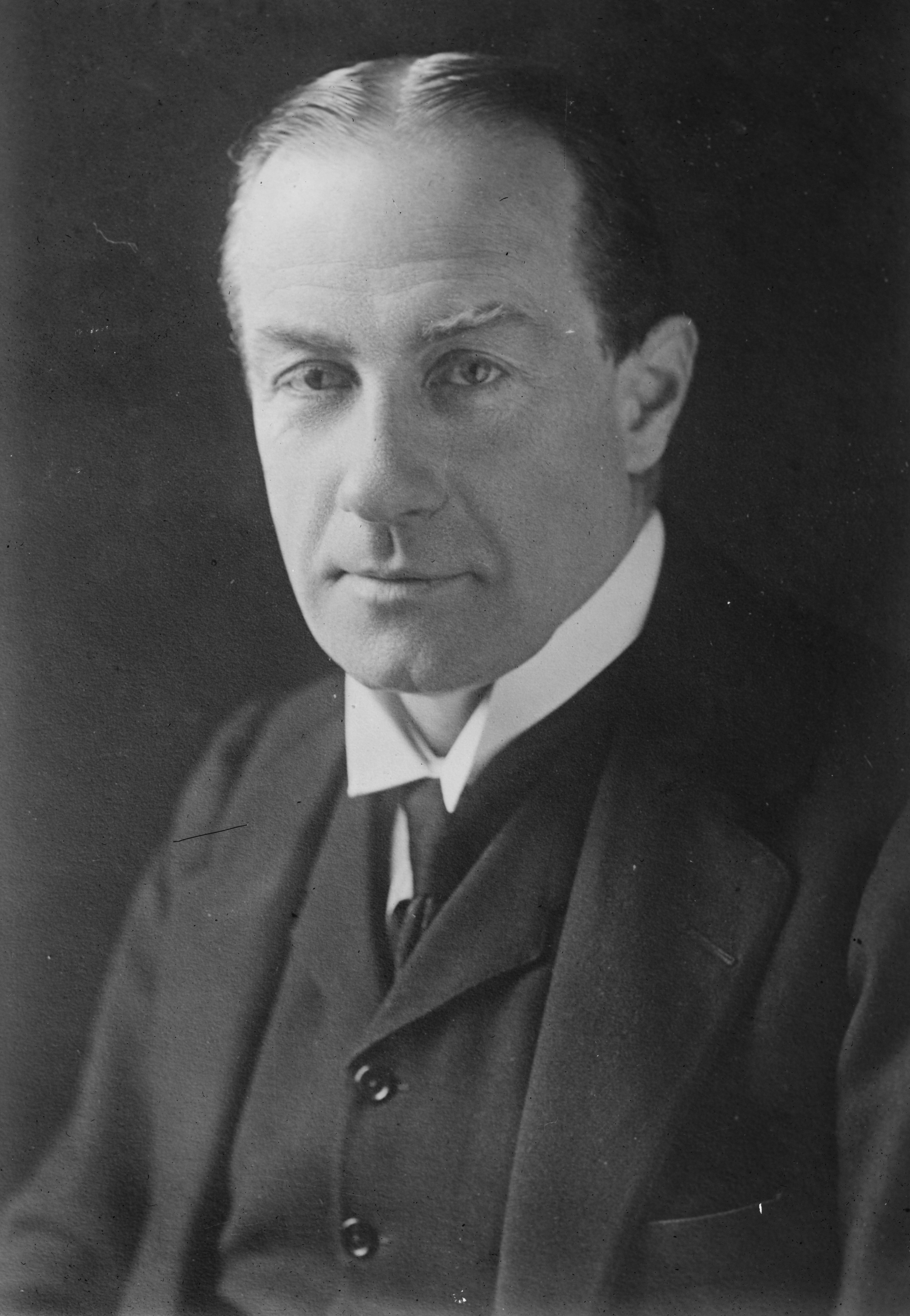
Stanley Baldwin
desire to marry her to British Prime Minister Stanley Baldwin, who told him that the Government, the Church, and the public would not go along with it. Edward and his supporters (Winston Churchill among them) floated the idea of a morganatic marriage, in which he would marry Simpson, remain king, but she would not become queen. Baldwin didn’t like the idea, but did seek the opinions of the Dominion governments, some of whom also expressed dissatisfaction with the idea. Eventually, Edward told Baldwin that he would be willing to abdicate if it meant he was able to marry Wallis Simpson. The other option was to go against the advice of his ministers, prompting the government to resign and sparking a constitutional crisis. Edward chose abdication. 

     On the night of his abdication, the former king – now Prince Edward, Duke of Windsor – addressed the British nation and Empire in a radio broadcast, which became one of most poignant of the 20th Century, for it explained why Edward had been willing to throw everything away for marriage to the woman he loved:

     At long last I am able to say a few words of my own. I have never wanted to withhold anything, but until now it has not been constitutionally possible for me to speak.

     A few hours ago I discharged my last duty as King and Emperor, and now that I have been succeeded by my brother, The Duke of York, my first words must be to declare my allegiance to him. This I do with all my heart.

     You all know the reasons which have impelled me to renounce the Throne. But I want you to understand that in making up my mind I did not forget the country or the Empire which as Prince of Wales, and lately as King, I have for twenty-five years tried to serve. But you must believe me when I tell you that I have found it impossible to carry the heavy burden of responsibility and to discharge my duties as King as I would wish to do without the help and support of the woman I love.

     And I want you to know that the decision I have made has been mine and mine alone. This was a thing I had to judge entirely for myself. The other person most nearly concerned has tried up to the last to persuade me to take a different course. I have made this, the most serious decision of my life, only upon the single thought of what would in the end be best for all.

     This decision has been made less difficult to me by the sure knowledge that my brother, with his long training in the public affairs of this country and with his fine qualities, will be able to take my place forthwith, without interruption or injury to the life and progress of the Empire. And he has one matchless blessing, enjoyed by so many of you and not bestowed on me – a happy home with his wife and children.
     During these hard days I have been comforted by Her Majesty my mother and by my family. The Ministers of the Crown, and in particular Mr. Baldwin, the Prime Minister, have always treated me with full consideration. There has never been any constitutional difference between me and them and between me and Parliament. Bred in the constitutional tradition by my father, I should never have allowed any such issue to arise.

     Ever since I was Prince of Wales, and later on when I occupied the Throne, I have been treated with the greatest kindness by all classes of the people, wherever I have lived or journeyed throughout the Empire. For that I am very grateful.

     I now quit altogether public affairs, and I lay down my burden. It may be sometime before I return to my native land, but I shall always follow the fortunes of the British race and Empire with profound interest, and if at any time in the future I can be found of service to His Majesty in a private station I shall not fail.

     And now we all have a new King. I wish him, and you, his people, happiness and prosperity with all my heart. God bless you all. God save The King.

     With this, the course of history for Britain and its monarchy was changed in a major way. The abdication brought to the throne Edward’s brother Albert, who became George VI, and which made 1936 the Year of the Three Kings.


     At the time, George’s daughter Princess Elizabeth was 10 years old, and expected to live a relatively quiet life in the country. But prospect ended with the abdication, for Elizabeth was now first in line to the throne, and became Queen in 14 years later. Her mother Queen Elizabeth never forgave Edward, for she believed that her husband’s death in 1952 was hastened by the strains of kingship being placed upon him, particularly during the period of the Second World War, in which the King served admirably as the leader of his people.

Elizabeth II likely would not have become Queen had her uncle not abdicated.
 
     Edward and Wallis married in 1937, and remained together for 36 years until his death in 1972. He remains the only British monarch to voluntarily give up the throne, and the drama of the events surrounding his abdication is probably a big reason why the reigning Queen will not likely abdicate, and why the royal family in general does not look upon abdication in a favorable light. For them, this was not just an abdication; it was a dereliction of duty.


Photo Credit: German Federal Archives via Wikimedia Commons cc