Showing posts with label William the Conqueror. Show all posts

Monday, June 9, 2014

A History of British Claims to the French Throne

     In the past weekend, the world witnessed the commemorations in France of the 70th anniversary of the D-Day landings in Normandy, which proved to be a defining point not just in the course of World War II, but also in the course of 20th Century history.

     Her Majesty the Queen took center stage in those commemorations since she is the only living head of state who served in the war and can vividly remember what it was like to have lived through it.

     The commemorations took place as the Queen was concurrently paying a state visit to France, and wherever she went, the Queen was met with warm applause and affection, and the French president - Francois Hollande - was noted for paying respect toward the 88 year old monarch by bowing to her throughout the visit.

     With all the affection on display for the Queen in France, it is easy to remember that Britain and France were not always on good terms with each other. For centuries, the two countries were at each others throats, and some of the past enmity resulted from English - and later British - claims to the French throne.

Sculpture of William I, Duke of Normandy and King of England at Lichfield Cathedral.
Image Credit: WikiWikiPhil via Wikimedia Commons (Public Domain)

     The complicated history has its roots in the Norman Conquest of 1066, for as Duke of Normandy, William I of England (the Conqueror) was also a vassal to the kings of France. This resulted in a vague relationship in which the King of England was at once, a subject and inferior to the French king within France, as well as his equal as a sovereign monarch.

     The situation became more muddled when Henry II ascended to the throne in 1154. His father's family - the Plantagenet's - held French lands as the Counts of Anjou (becoming known as the Angevin's as a result), and his mother Matilda was the only living legitimate child of Henry I of England - the younger son of William the Conqueror.

Henry Plantagenet, who succeeded to the
English throne as Henry II, and ruled over a vast empire.
(Public Domain-US)

     Upon the death of his only legitimate son William, Henry made Matilda his heir, but upon his death, his nephew Stephen seized the throne whilst Matilda was away in France. The two cousins then become embroiled in a bitter civil war to wrest control of the crown known as the Anarchy. In France, Geoffrey Plantagenet snatched Normandy away from Stephen, and passed it to his and Matilda's son, Henry.

     The conflict was finally resolved when Matilda agreed to give up her fight for the crown in exchange for Stephen recognizing Matilda's son as his heir in England.

     By the time Henry II became king, he already controlled French lands in Normandy, Anjou, and Aquitaine (through his marriage to his wife, Eleanor). This amounted to almost half of France, which made Henry the most powerful vassal in France - just as powerful as the French kings, who were suppose to be his nominal overlords. Now as King of England, he presided over an empire - the Angevin Empire, which stretched from the Pyrenees in France to the Scottish borders.

The Angevin Empire at its height in solid yellow. The checkered
yellow represents the Angevin influence sphere of influence.
Image Credit: Cartedaos via Wikimedia Commons cc

     Throughout reigns of Henry II and his sons, Richard I and King John, the French kings attempted to assert their authority over the Plantagenet's in France, and fought in series of armed conflicts against them. But after Henry and Richard - two strong kings - came John, who proved to be inept against the effectiveness of Philip Augustus, who gradually drove John from his ancestral lands in Normandy, Anjou, and several other territories in France. By the end of John's reign in 1216, he was left with territories in the south, including Aquitaine and Gascony, as well as the Channel Islands off the coast of Normandy.

     The situation remained unchanged for about 80 years, until Philip IV of France attempted to confiscate Gascony in the late 1290's and early 1300's, partly to fulfill French obligations under its secret mutual assistance pact with Scotland (the Auld Alliance), which was fighting a war of independence against England and its king, Edward I.

Lands of the English kings in France. After King John, the territory was
mostly confined to the Duchy of Aquitaine and the Channel Islands of Normandy.
Image Credit: Lotroo (Public Domain)

     Under King Edward, Gascony stayed in English hands under an 1303 treaty in which Edward's son and heir (also named Edward) married Philip's daughter Isabella. But Edward II lost it during his reign, and this was a factor in him being deposed by Isabella and her lover Roger Mortimer. She was able to secure Gascony and the rest of Aquitaine for her and Edward's son, the new king, Edward III.

     In 1337, King Edward asserted his claim French throne through his mother as the daughter of Philip IV. When Isabella's father died, he was succeeded by his son Philip V, who died without a heir and was succeeded by his brother Charles IV, who also died without an heir.

The Coat of Arms of Edward III. To represent his French claims,
Edward quartered the lions of England with the fleur-de-lis of France.
Image Credit: Sodacan via Wikipedia Commons cc

     This left Edward as the closest living male relative of the dead king, but Salic law prohibited succession through the female line, so the French throne was passed on to Philip VI - Charles IV's cousin through his father's younger brother. Edward, as Duke of Aquitaine, owed feudal homage to the French king - just as his predecessors had done - but he refused to do the same for Philip on the grounds that he was not the rightful heir to the French throne. 

     The result was over a century of on-and-off conflict between England and France known collectively as the Hundred Years' War. During the reign of Henry V of England, the English defeated the French at the Battle of Agincourt in 1415, which in five years resulted in the Treaty of Troyes. This treaty recognized Henry as the legitimate heir of Charles VI of France and provided for the marriage of Charles' daughter Catherine to Henry.

     In 1422, Henry and Charles died within two months of each other, leaving Henry's nine-month-old son as King of England and France in the form of Henry VI. But Charles' son took advantage of the situation and seized the French throne as Charles VII, with his coronation being held at Reims Cathedral on July 17, 1429.

     In response, Henry VI's French coronation was held two years later at Notre Dame, but English fortunes on the continent were on the wane. Henry VI more-or-less did not take an interest in war with the French, and by 1453, the Hundred Years' War ended with England losing all of its territories in continental Europe, except for Calais along the French coast, and this was lost by Queen Mary I over a century later.

     Nevertheless, English and British monarchs continued to assert a nominal claims to the French throne, and styled themselves as King or Queens of England, Scotland (later merged to become Great Britain), France, and Ireland, even though no serious efforts were made to take the throne after 16th Century.

     This finally came to an end on January 1, 1801, when Acts of Union passed by the British and Irish parliaments came into effect, which formally merged the Kingdom of Great Britain and the Kingdom of Ireland into the United Kingdom of Great Britain and Ireland. 

Flag of the United Kingdom.

     Upon this union of a new country, George III, now King of the United Kingdom, took the opportunity to drop his pretentious title as King of France, which had become irrelevant anyway because of the French Revolution.

     However, the British monarch is still known as the Duke of Normandy (regardless of gender) because he or she still retains sovereignty over the Channel Islands of Guernsey and Jersey, which are the remnants of the Duchy of Normandy once ruled by William the Conqueror.

Monday, January 6, 2014

On This Day: January 6


King Harold placing the Crown of England on himself


     On the same day that Edward the Confessor was buried at Westminster Abbey, the Witenagemont – the council of Anglo-Saxon nobles – selected Harold, Earl of Wessex as the next King of England and he was probably crowned in the Abbey.

     Harold would not last long as king. Upon his accession, he was soon faced with hostile movements from overseas. The King of Norway declared that he was the rightful successor, and was aided by Harold’s brother Tostig, who had been exiled in the previous year following a revolt in his earldom of Northumbria. Meanwhile in Normandy, Duke William began preparations for invasion. He had been previously promised the English throne in 1051 by his cousin, King Edward, but Edward had apparently changed his mind on his deathbed to make Harold his successor. However William believed that the promise to him by Edward was irrevocable, and that the crown was rightfully his for the taking.

     The new king prepared defense forces on the Isle of Wight, but William’s invasion was delayed for several months due to unfavorable weather, and these forces were disbanded. But on September 8, an army led by Tostig and King Harald of Norway landed on the northeast coast of England, near the River Tyne. Harold had to reorganize his forces and march up to Yorkshire, where he decisively defeated his brother at the Battle of Stamford Bridge on September 25th.

     Yet Harold could not celebrate this triumph because Duke William’s fleet finally sailed for England on September 27, arriving the next day in East Sussex. Having taken his watch off against the Norman duke, King Harold had to rush his exhausted soldiers 241 miles South to intercept William his army. On October 14th, they clashed at the Battle of Hastings, which lasted for over nine hours and resulted in the death of Harold (who was shot in the eye) and the defeat of the English army. Within months, William would be accepted as King of England, beginning a new and defining chapter in England’s – as well Britain’s – history.

Richard II

     In 1367, Richard II of England was born in Bordeaux, France, where his grandfather Edward III was Duke of Aquitaine.

     Richard was a son of Edward, Prince of Wales (the Black Prince) and Joan of Kent. He became King of England at the age of ten upon the deaths of his father, then his grandfather within a year of each other.

     As a young king of 14 years old, Richard played a role in successfully diffusing the Peasant’s Revolt of 1381 and preventing a larger crisis. But the political elite disliked being how the King relied heavily on his narrow group of personal courtiers, as opposed to taking the counsel of the wider establishment. A group called the Lord’s Appellant took control of the government, leaving Richard as a king in name only, as well as exercising power in his name and removing many of his favorites from the royal court.

     In two years, Richard regained power from the Lord’s Appellant, and peacefully coexisted with them. There was no immediate retribution, but Richard continued to see these men as threats, probably wanted to wait until he felt he was strong enough to exact revenge on his former opponents. He also probably viewed revenge as a dish best served cold, and it was not until 1397 that he began going after the men – three in all, two of whom were condemned to death and the other given a life sentence.

     This was the start of what would be called Richard’s tyranny, which included the exiling of two dukes, including his cousin, Henry Bolingbroke. The dukes were supposed to settle an argument through battling each other, but Richard exiled one for life and Henry for ten years. However, when Henry’s father, the Duke of Lancaster died in 1399, Richard disinherited Henry of his lands and extended his exile to life – thereby removing another threat to the childless Richard, since Henry and his family were of royal blood and also strong candidates to take over if Richard died without an heir.

     This approach to rid of crown claimants backfired, for Henry eventually mounted an invasion and gathered supporters in England. His stated aim was to reclaim only his ancestral lands and titles, but his real goal attain the crown for himself. Under pressure from the political establishment, Richard was forced to abdicate, and his cousin had himself crowned Henry IV with little opposition.

     Following what was basically a deposition, Richard was eventually starved to death at Pontefract Castle in February 1400. He was buried first at Kings Langley Church, and then at Westminster Abbey under Henry V, who wished to atone for his father Henry IV’s deeds and to prove that Richard had indeed died.

     Richard's lasting legacy was the 1391 completion of the of renovation's at Westminster Hall, which had been started under Henry III in 1245 but had laid dormant until Richard took up the project. Under architect Henry Yevele, the renowned hammer-beam roof was constructed, which removed the need for support columns and provided an entirely open space with no obstructions. Fifteen life-sized statue's of kings were also places with niches in the walls, and a dais was placed at the end for the King to sit above all others.

 
Anne, Queen consort of England

     In 1540, Henry VIII married his fourth wife, Anne of Cleaves at the Palace of Placentia in Greenwich, London.

     The marriage did not last long, for Henry had already been displeased with Anne’s lack of education and sophistication, as well as for not being as beautiful as had been portrayed in the paintings her that he viewed. He tried to get out of it, but could not do so without possibly endangering his alliances with Germans who were is dispute with Charles V, the Holy Roman Emperor and an adversary of Henry.

     Following the marriage, their first night as a married couple was unsuccessful, and Henry confided to a friend that he liked Anne less so now than before. On July 6th, Anne was informed that the King was reconsidering the marriage, and witnesses statements from courtiers and physicians testified to his disappointment with Anne’s appearance. Eventually, Anne agreed to an annulment, which became effective on July 9th on the grounds of non-consummation.

     Anne received a generous settlement from Henry, including two residences – Richmond Palace and Hever Castle. They became good friends, and she was referred to as the King’s Beloved Sister – becoming an honorary member of his family. She was invited to court functions and even took precedence over all women in England, except for the King’s wife and daughters. She outlived all of Henry’s other wives and would live to witness the coronation of her step-daughter, Queen Mary I.

Royal Profile: Edward the Confessor

Edward the Confessor seated on his throne, as seen on the Bayeux Tapestry.

     On this day in 1066, Edward the Confessor, King of England (1042-1066), was buried at Westminster Abbey. He had died on the previous day at the age of around 62.

     Born between 1002 and 1005, he was the eldest son of King Æthelred the Unready and Emma of Normandy, though his path to throne was hardly smooth sailing.

     In his youth, England was targeted by Danish raiders, who eventually turned their sights on conquest under the leadership of King Sweyn. As Æthelred's son, Edward was a target of the invaders, though he and his family escaped to Normandy - the homeland of his mother, Queen Emma - when Sweyn seized the throne in 1013. Fortunately for the House of Wessex, Sweyn died the following year, and the English nobility invited
Æthelred to be restored to the throne. Edward was sent to London as a pledge of good faith, along with the King's ambassadors to negotiate the terms of his return.

     When King Æthelred died in April 1016, he was succeed by Edmund Ironside (son from his previous marriage and therefore, Edward's half-brother), and the struggles with the Danes continued - this time under Sweyn's son Cnut, who saw England as his lost inheritance. Edmund died in November of that year, and Cnut emerged as King. Edward and younger brother Alfred fled to Normandy again, surviving the near-mass wipe-out of other members of the royal family - including his half brother from Æthelred's first wife, which made Edward the leading Anglo-Saxon claimant to the throne.

     Meanwhile, his mother Queen Emma married Cnut, and had two more children with him. Edward stayed in exile in Normandy for about 25 years, and was supported by his Norman-French relatives, who made attempts to invade England on his behalf.

     In 1035, Cnut died, and was succeeded by Harold Harefoot, his son from his first marriage. Queen Emma resented this move, for she wanted Harthacnut, her son by Cnut, to be King of England. It is thought that she invited Edward and Alfred over to England to counter the growing popularity of Harold and help Harthacnut assume the throne. In 1036, the brother came over separately, and Alfred was captured by Godwin, Earl of Wessex, who had Alfred blinded to death. Edward fought a successful skirmish in Southampton, but retreated back to Normandy.

     King Harold died in 1040, and was succeeded by Harthacnut, who in 1041, invited his half-brother Edward to return to England, where he recognized Edward as his heir.

     The following year, Edward succeeded Harthacnut as King, and was crowned at Winchester Cathedral. He ascended the throne with the support of Godwin, Earl of Wessex, the most powerful of the English nobles -  the same Godwin who was supposedly responsible for the death of Edward's brother in 1036. This contributed to Edward's personal hatred for Godwin, and his reign was to be dominated by a power struggle between him and Godwin and his family.

     As part of his uneasy relationship with Godwin, Edward married his daughter Edith, and gave titles, offices, and lands to Godwin's other children and relatives. To counter the power that the family was amassing under Godwin, the childless King Edward made an offer in 1051 of the English throne to his cousin William, Duke of Normandy. This was used as means to bring down the over-mighty earl a peg or two, for Edward figured that the expectations of the succession (which could be changed at any time by Edward) would keep Godwin in line.

     This tension increased as Edward increasingly took Norman's into his inner circle, and reached a flashpoint in September 1051, when one of his Norman supporters, Eustace II, Count of Boulonge and his men caused a civil disturbance in Dover. Edward demanded that Godwin - as Earl of Kent - punish the town's burgesses, but Godwin refused. This nearly resulted in an armed conflict and a civil war as Edward seized his chance to take on Godwin. But the armies of both sides did not want a fight, fearing that disunity would result in another Danish invasion, and Godwin - with his support gone - fled from England. But in the following year, Godwin returned with an army and demanded to be restored to his earldoms, and this time, the political elite sided with him, again fearing disunity and civil war. For them, the idea of a united England was more powerful and compelling than any individual - even than the King. As a result, Edward was forced banish many of his French supporters and to restore Godwin and his family to their positions in England, though the King restructured the earldoms in an effort to prevent the Godwin's from becoming dominant.

     This new political settlement lasted for more than a decade, and when Godwin himself died in 1053, he was succeeded to the Earldom of Wessex by his eldest son Harold, whilst another son named Tostig was made Earl of Northumbria by King Edward. Indeed, this was a period of relative calm for Edward, who seemed to have made his peace with Godwin's family - or at the least, tolerated their presence and power in his kingdom.

     Elsewhere in Britain, Edward may have aided Malcolm Canmore in seizing the Scottish throne from Macbeth and his stepson Lulach as Malcolm III, whilst in Wales, he made some of the prince's there pay homage to him and his earls.

     At the end of 1065, King Edward's new (though unfinished) abbey at Westminster was consecrated, though Edward himself was not in attendance due to ill health. Within days, it was clear that he was dying, and on his deathbed, Edward apparently had a change of heart and decided to entrust the Kingdom of England to Harold Godwinson, Earl of Wessex, instead of Duke William of Normandy. Harold was the leading Anglo-Saxon earl, and perhaps the childless king had gotten over the troubles with Harold's family to the extent that he was comfortable in handing Harold the crown.

     Upon Edward's death, Harold - who was alleged to have promised to support Duke William's claims to the throne - was elected and crowned as King of England. The disputed claim would later result in a crisis and the Norman conquest later that year.

      King Edward was canonized in 1161 by Pope Alexander III, and remains venerated in both the Catholic and Anglican churches for his supposed Christian piety and for living a saintly life - especially with regard to his childlessness, which his monkish admirer's claimed was due to a commitment to celibacy. He was not a martyr, so he became known as "the Confessor", and remained at prominent patron saint of England he was replaced by St. George in the 14th Century.

Wednesday, December 18, 2013

Royal Profile: Edith of Wessex

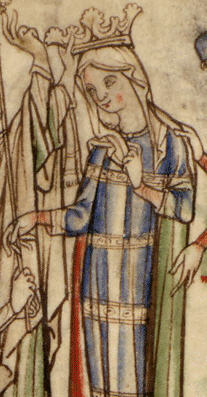
Edith of Wessex, Queen Consort of England
     
     On this day in 1075, Edith of Wessex, the wife and queen consort of King Edward the Confessor, died at Winchester. She was the daughter of Godwin, Earl of Wessex, the most powerful English nobleman of the age, and the man with whom Edward frequently clashed during the course of his reign. It has been speculated that it was due to Edward's issues with Edith's family that he did not have children with her, though this claim has been disputed. However, unlike most wives of English kings during the 10th and 11th centuries, Edith was crowned queen.

     Edith was a political operative, who was part of King Edward's inner circle of advisers, and helped to secure the Earldom of Northumbria  for her brother Tostig. She was even accused in court of plotting to assassinate a Northumbrian nobleman in Tostig's interest when he became unpopular (though he was eventually forced into exile as the revolt grew out of control).

     As the richest woman in England according to the Domesday Book, Edith was also a philanthropist of the religious sort, and gave lands to one abbey in order to secure endowment for the Diocese of Bath. She also rebuilt Wilton Abbey, where she had been brought up and educated.

     When King Edward dies in January 1066, Edith's other brother Harold succeeded him to the throne. Edward had earlier promised his crown to his cousin William, Duke of Normandy, but had an apparent change of heart at the last minute and signaled his desire for Harold to become king. But William invaded England to claim what thought of as his irrevocable inheritance, and Harold was killed at the Battle of Hastings in October.

     Edith survived the Norman Conquest on English - the only senior member of her family to so, since four of her brothers had been killed either at Hastings or the Battle of Stamford Bridge, and another brother, Wulfnoth, was held captive in Normandy. Upon her death, she was buried with her husband in Westminster Abbey in funeral arranged by William the Conqueror (whose takeover of England may not have happened if Edith had children with Edward).